
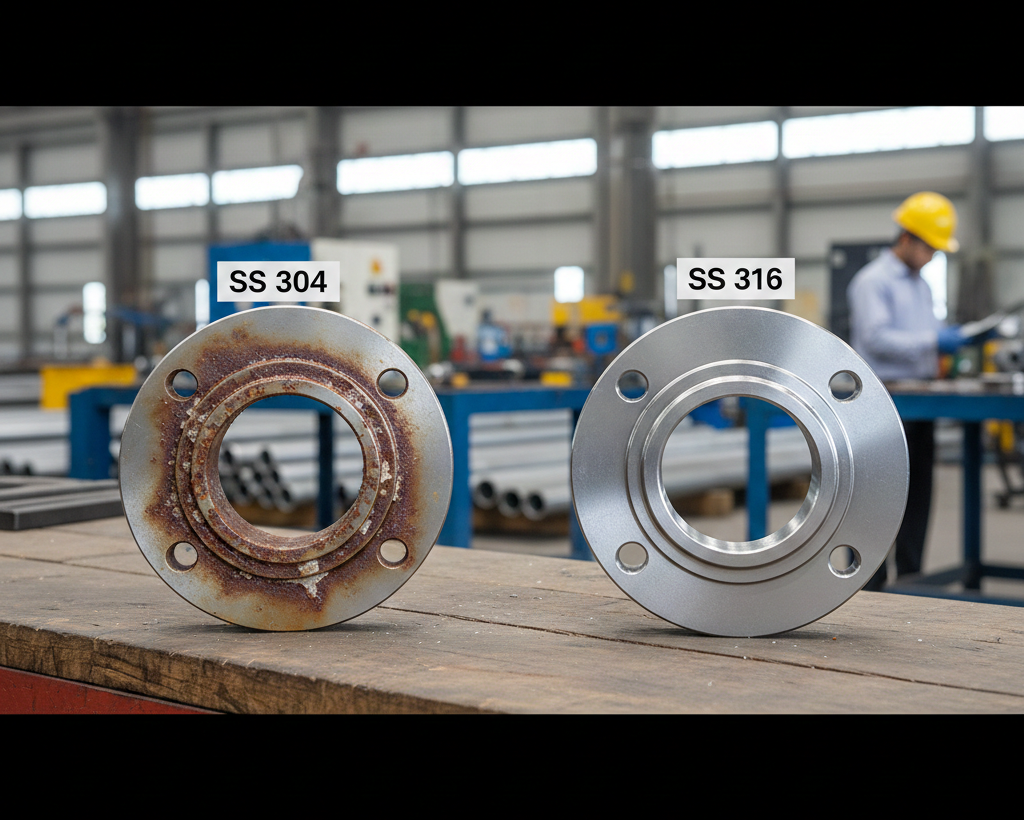
Stainless Steel 304 vs. 316: Which Grade is Best for Your Pipe Fittings? In the world of industrial hardware, choosing the right material isn't just a matter of cost—it’s a matter of safety and longevity. At Pooja Steel, we frequently get asked: 'Should I use SS 304 or SS 316 for my project?' While they look identical to the naked eye, the chemical differences between these two alloys are significant. Here is everything you need to know to make an informed decision. Understanding the Basics: SS 304 Stainless Steel 304 is the most common form of stainless steel used around the world. It contains high levels of chromium (between 18% and 20%) and nickel (between 8% and 10.5%). Key Benefits of SS 304: Affordability: Generally more cost-effective than 316. Versatility: Excellent for kitchen equipment, indoor piping, and architectural trim. Durability:Highly resistant to oxidation and most oxidizing acids. --- The Superiority of SS 316 Stainless Steel 316 is often referred to as 'Marine Grade' steel. The secret ingredient that sets it apart is Molybdenum (usually 2% to 3%). This addition significantly increases the metal's resistance to corrosion, particularly against chlorides and saline environments. Key Benefits of SS 316: Chloride Resistance: Virtually immune to 'pitting' caused by salt and industrial chemicals. High-Temperature Strength: Performs better under thermal stress than 304. Longevity: Ideal for harsh environments where maintenance access is difficult. Which One Should You Choose? Choose SS 304 if: 1. Your project is located inland, away from the coast. 2. You are dealing with fresh water or standard household chemicals. 3. You are working within a tighter budget for a large-scale construction project. Choose SS 316 if: 1. The fittings will be exposed to saltwater or coastal air. 2. You are operating in the chemical processing, pharmaceutical, or textile industries. 3. The pipes will carry highly corrosive solutions or de-icing salts. > Expert Tip from Pooja Steels: Using SS 304 in a high-chloride environment might save money upfront, but the cost of replacing corroded fittings within two years will far outweigh the initial savings of SS 316. --- Why Source from Pooja Steels? At Pooja Steels & Engineering, we provide certified, high-grade stainless steel pipe fittings, flanges, and fasteners. Whether you need the cost-efficiency of 304 or the ruggedness of 316, our products undergo rigorous quality checks to ensure they meet international standards. Discover the key differences between Stainless Steel 304 and 316. Learn about molybdenum, corrosion resistance, and how to choose the right grade for your industrial fittings. SS 304 vs 316, Stainless Steel Pipe Fittings, Pooja Steels, Marine Grade Steel, Industrial Flanges.


This is your website preview.
Currently it only shows your basic business info. Start adding relevant business details such as description, images and products or services to gain your customers attention by using Boost 360 android app / iOS App / web portal.
S 304 vs 316 Pipe Fittings: Which Do You Need?
2026-01-06T04:22:36
Stainless Steel 304 vs. 316: Which Grade is Best for Your Pipe Fittings? In the world of industrial hardware, choosing the right material isn't just a matter of cost—it’s a matter of safety and longevity. At Pooja Steel, we frequently get asked: 'Should I use SS 304 or SS 316 for my project?' While they look identical to the naked eye, the chemical differences between these two alloys are significant. Here is everything you need to know to make an informed decision. Understanding the Basics: SS 304 Stainless Steel 304 is the most common form of stainless steel used around the world. It contains high levels of chromium (between 18% and 20%) and nickel (between 8% and 10.5%). Key Benefits of SS 304: Affordability: Generally more cost-effective than 316. Versatility: Excellent for kitchen equipment, indoor piping, and architectural trim. Durability:Highly resistant to oxidation and most oxidizing acids. --- The Superiority of SS 316 Stainless Steel 316 is often referred to as 'Marine Grade' steel. The secret ingredient that sets it apart is Molybdenum (usually 2% to 3%). This addition significantly increases the metal's resistance to corrosion, particularly against chlorides and saline environments. Key Benefits of SS 316: Chloride Resistance: Virtually immune to 'pitting' caused by salt and industrial chemicals. High-Temperature Strength: Performs better under thermal stress than 304. Longevity: Ideal for harsh environments where maintenance access is difficult. Which One Should You Choose? Choose SS 304 if: 1. Your project is located inland, away from the coast. 2. You are dealing with fresh water or standard household chemicals. 3. You are working within a tighter budget for a large-scale construction project. Choose SS 316 if: 1. The fittings will be exposed to saltwater or coastal air. 2. You are operating in the chemical processing, pharmaceutical, or textile industries. 3. The pipes will carry highly corrosive solutions or de-icing salts. > Expert Tip from Pooja Steels: Using SS 304 in a high-chloride environment might save money upfront, but the cost of replacing corroded fittings within two years will far outweigh the initial savings of SS 316. --- Why Source from Pooja Steels? At Pooja Steels & Engineering, we provide certified, high-grade stainless steel pipe fittings, flanges, and fasteners. Whether you need the cost-efficiency of 304 or the ruggedness of 316, our products undergo rigorous quality checks to ensure they meet international standards. Discover the key differences between Stainless Steel 304 and 316. Learn about molybdenum, corrosion resistance, and how to choose the right grade for your industrial fittings. SS 304 vs 316, Stainless Steel Pipe Fittings, Pooja Steels, Marine Grade Steel, Industrial Flanges.
2026-01-06T04:22:36


Submit Your Enquiry