
In the complex architecture of industrial piping systems, every component—no matter how small—serves a critical purpose. Among these, the Pipe End Cap stands as a fundamental guardian of system integrity. Whether you are managing a high-pressure chemical refinery or a large-scale water treatment plant, understanding the role of end caps is essential for maintaining a safe and efficient operation. At Pooja Steel & Engg, we specialize in providing high-quality SS 304 and 304L End Caps that meet the rigorous demands of modern engineering. In this blog, we explore why these fittings are indispensable and where they are most commonly applied. What is a Pipe End Cap? A pipe end cap is a fitting designed to act as a 'dead end' for a pipeline. Its primary function is to block the flow of liquids or gases, sealing the system off from the external environment. These fittings come in various shapes—including hemispherical, ellipsoidal, and flat—depending on the pressure requirements and the shape of the pipe. Key Applications of Pipe End Caps 1. Permanent or Temporary System Termination The most common use of an end cap is to terminate a pipe run. In many industrial projects, piping systems are built with future expansion in mind. An end cap is used to seal the current end of the line, allowing for pressure testing and operation while keeping the system ready for future connections. 2. High-Pressure Containment In industries like Oil & Gas and Petrochemicals, pipelines operate under extreme mechanical stress. Buttweld SS 304L End Caps are welded directly to the pipe, creating a leak-proof seal that can withstand high internal pressures without the risk of failure associated with mechanical joints. 3. Protection During Transit and Storage Precision-engineered pipes are often manufactured and then stored or shipped across long distances. During this time, the interior of the pipe is vulnerable to moisture, dust, and debris. End caps act as a protective barrier, ensuring that the pipe remains pristine and ready for installation upon arrival. 4. Preventing Corrosion and Contamination In food processing, pharmaceuticals, and chemical handling, contamination is a major risk. Stainless Steel 304/304L End Caps are highly resistant to oxidation. By sealing the pipe, they prevent air and corrosive elements from entering the system, which could otherwise lead to internal rust or product spoilage. Why Choose SS 304/304L for Your End Caps? When selecting material for end caps, Stainless Steel 304 and 304L are the industry standards for a reason: • Superior Weldability: The ‘L’ in 304L stands for 'Low Carbon.' This variant is specifically designed to prevent carbide precipitation during the welding process, ensuring that the welded joint remains as strong and corrosion-resistant as the pipe itself. • Cost-Effectiveness: SS 304 provides excellent durability and chemical resistance at a price point that is accessible for most industrial applications. • Aesthetic and Hygienic: SS 304 is easy to clean and maintain, making it the preferred choice for the food, beverage, and medical industries. Technical Specifications to Consider When ordering from a supplier like Pooja Steel & Engg, ensure you specify: • Standard: ASTM A403 / ASME B16.9 (for dimensions and material quality). • Schedule: SCH 10, 40, 80, or XXS (to match the wall thickness of your pipe). • Size: Ranging from 1/2' to 48' depending on your pipeline diameter. Conclusion While they may seem like simple components, pipe end caps are vital for the safety, longevity, and hygiene of any piping network. Choosing the right material grade, such as SS 304/304L, ensures that your system is protected against leaks and corrosion for years to come. Looking for high-quality SS 304/304L End Caps? Contact Pooja Steel & Engg today for a quote. We are leading manufacturers and stockists of premium stainless steel fittings, dedicated to powering your industrial success with precision-engineered products.


This is your website preview.
Currently it only shows your basic business info. Start adding relevant business details such as description, images and products or services to gain your customers attention by using Boost 360 android app / iOS App / web portal.
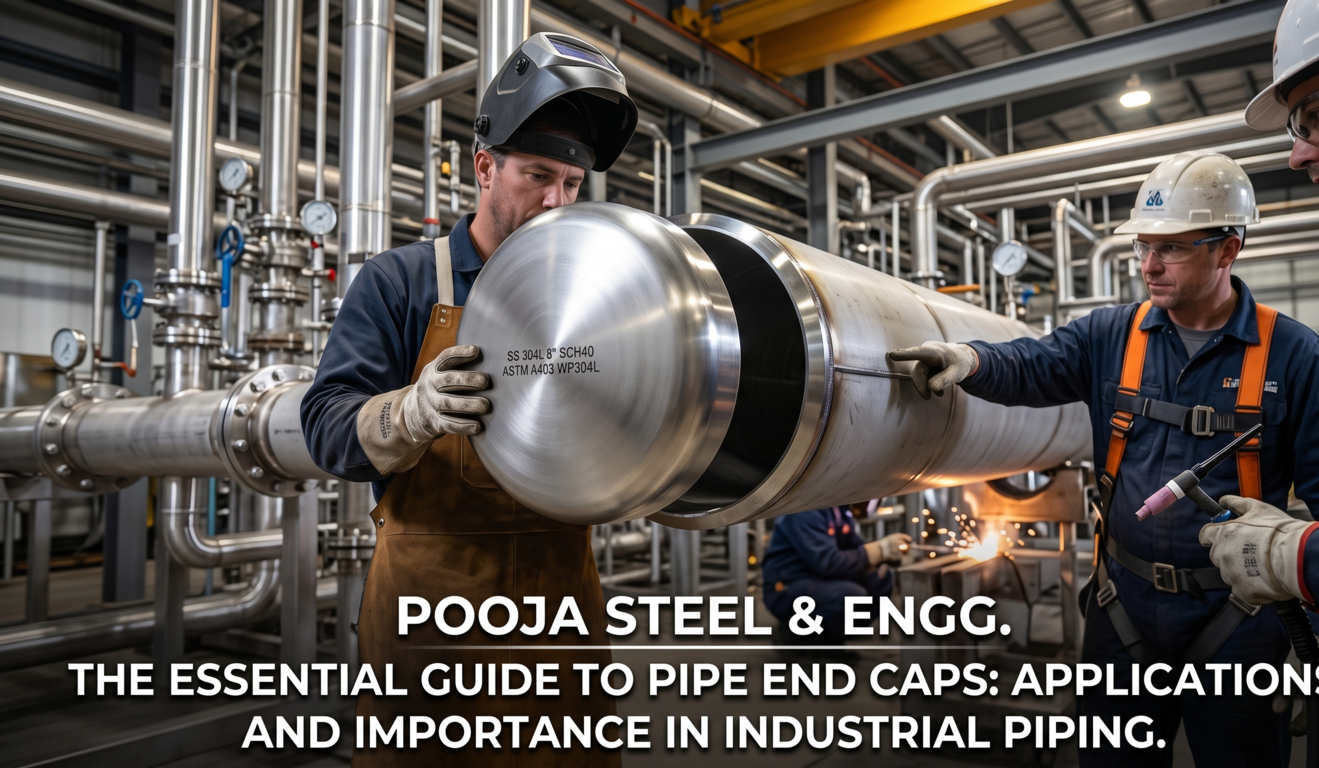
The Essential Guide to Pipe End Caps: Applications and Importance in Industrial Piping
2026-04-17T04:39:30
In the complex architecture of industrial piping systems, every component—no matter how small—serves a critical purpose. Among these, the Pipe End Cap stands as a fundamental guardian of system integrity. Whether you are managing a high-pressure chemical refinery or a large-scale water treatment plant, understanding the role of end caps is essential for maintaining a safe and efficient operation. At Pooja Steel & Engg, we specialize in providing high-quality SS 304 and 304L End Caps that meet the rigorous demands of modern engineering. In this blog, we explore why these fittings are indispensable and where they are most commonly applied. What is a Pipe End Cap? A pipe end cap is a fitting designed to act as a 'dead end' for a pipeline. Its primary function is to block the flow of liquids or gases, sealing the system off from the external environment. These fittings come in various shapes—including hemispherical, ellipsoidal, and flat—depending on the pressure requirements and the shape of the pipe. Key Applications of Pipe End Caps 1. Permanent or Temporary System Termination The most common use of an end cap is to terminate a pipe run. In many industrial projects, piping systems are built with future expansion in mind. An end cap is used to seal the current end of the line, allowing for pressure testing and operation while keeping the system ready for future connections. 2. High-Pressure Containment In industries like Oil & Gas and Petrochemicals, pipelines operate under extreme mechanical stress. Buttweld SS 304L End Caps are welded directly to the pipe, creating a leak-proof seal that can withstand high internal pressures without the risk of failure associated with mechanical joints. 3. Protection During Transit and Storage Precision-engineered pipes are often manufactured and then stored or shipped across long distances. During this time, the interior of the pipe is vulnerable to moisture, dust, and debris. End caps act as a protective barrier, ensuring that the pipe remains pristine and ready for installation upon arrival. 4. Preventing Corrosion and Contamination In food processing, pharmaceuticals, and chemical handling, contamination is a major risk. Stainless Steel 304/304L End Caps are highly resistant to oxidation. By sealing the pipe, they prevent air and corrosive elements from entering the system, which could otherwise lead to internal rust or product spoilage. Why Choose SS 304/304L for Your End Caps? When selecting material for end caps, Stainless Steel 304 and 304L are the industry standards for a reason: • Superior Weldability: The ‘L’ in 304L stands for 'Low Carbon.' This variant is specifically designed to prevent carbide precipitation during the welding process, ensuring that the welded joint remains as strong and corrosion-resistant as the pipe itself. • Cost-Effectiveness: SS 304 provides excellent durability and chemical resistance at a price point that is accessible for most industrial applications. • Aesthetic and Hygienic: SS 304 is easy to clean and maintain, making it the preferred choice for the food, beverage, and medical industries. Technical Specifications to Consider When ordering from a supplier like Pooja Steel & Engg, ensure you specify: • Standard: ASTM A403 / ASME B16.9 (for dimensions and material quality). • Schedule: SCH 10, 40, 80, or XXS (to match the wall thickness of your pipe). • Size: Ranging from 1/2' to 48' depending on your pipeline diameter. Conclusion While they may seem like simple components, pipe end caps are vital for the safety, longevity, and hygiene of any piping network. Choosing the right material grade, such as SS 304/304L, ensures that your system is protected against leaks and corrosion for years to come. Looking for high-quality SS 304/304L End Caps? Contact Pooja Steel & Engg today for a quote. We are leading manufacturers and stockists of premium stainless steel fittings, dedicated to powering your industrial success with precision-engineered products.
2026-04-17T04:39:30


Keywords
- SS 304 vs 304L end cap for welding
- Large diameter SS 304 pipe caps 24 inch
- Corrosion resistant 304L end caps for chemical plants
- Schedule 40 SS 304L end cap price
- Food grade SS 304 end caps
- SS 304L pipe end cap weight chart
- Buy SS 304L dish end caps online
- Stainless steel pipe fittings manufacturers in India
- SS 304 end cap stockist in India
- SS 304 end cap stockist in Vadodara
- SS 304 end cap stockist in Mumbai
- 304L SS Seamless End Cap Manufacturer
- Stainless Steel 304 Buttweld End Caps
- ASME B16.9 304L End Cap Dimensions
- ASTM A403 WP304L Pipe Cap
- SS 304/304L End Cap Price List
- SS 304 end caps durability
- 304L pipe end cap applications
- buttweld SS 304L end cap
- stainless steel end caps food industry
- ASTM A403 ASME B16.9 end caps
Submit Your Enquiry